
Your Cart is Empty
QUALITY AND CUSTOMERS SATISFACTION IS OUR MAIN PRIORITY


Dog paw wipes for vet clinics are disposable cleaning cloths used to remove everyday dirt from dogs’ paws and coats, with the aim of keeping routine visits and owner care cleaner. Clinics need a clear separation between cosmetic cleaning, veterinarian-directed skin treatment, and environmental disinfection.
A muddy paw at reception and an inflamed paw in an examination room need different responses. Your cleaning routine should help staff tell the difference before reaching for a wipe.
Owners also need practical instructions they can repeat at home. The guide to grooming wipes for sensitive-skin dogs covers a related shopping topic; a veterinarian’s patient-specific instructions take priority.
For your 2026 clinic protocol, make the decision about purpose first. A product that removes dirt is not automatically appropriate for damaged skin, a procedure site, or a shared examination table.
Veterinary clinics handle unfamiliar dogs, changing skin conditions, and shared workspaces. Staff need instructions that remain clear when an owner brings in a product marketed for several different tasks.
Choose the cleaning task before choosing the wipe. Convenience matters only after the product’s intended use matches the patient and the job.
Separate these tasks in your written procedure:
A grooming wipe belongs in the first category unless its actual labeling and the treating veterinarian’s instructions establish another use. Keep product names out of the protocol until someone has checked those details.
Start with a written task list rather than a purchase. You can draft it using the supplies already in your clinic and identify which tasks require a different product or clinical decision.
For uncomplicated dirt on intact skin, a clean damp cloth is a manual option. Its limitation is handling: reusable cloths need a defined laundering process and must not move between patients without appropriate cleaning.
Disposable grooming wipes remove that laundering step, but they create waste and still require careful handling. Neither format replaces an examination when a dog shows pain or skin changes.
Look before you clean. Redness, swelling, discharge, bleeding, a foreign object, or a painful response calls for veterinary assessment rather than more rubbing.
Inspection also helps preserve useful clinical information. If a dog presents for a paw complaint, ask the treating clinician whether cleaning should wait until after examination or sampling.
During your 2026 staff review, demonstrate the difference between wiping away ordinary mud and handling a sore paw. The action looks similar; the decision is not.
Read the complete label before comparing product names. Check the intended species, permitted application sites, ingredient information, warnings, storage instructions, and whether rinsing is required.
Best for routine cleanup: a dog-labeled grooming wipe whose directions match the intended body area. Its benefit is a ready-to-use format; its limitation is that a grooming label does not establish treatment or disinfection performance.
Use Fureverfriends-2608 for everyday dog-accessory shopping, while keeping clinical product approval with your veterinary team. A retailer’s product category is not a substitute for a formula review.
Draw a simple layout before adding equipment. Use 3 zones: clean supplies, patient care, and used materials. This is a suggested workflow, not a claim that any particular layout prevents infection.
Keep the dispensing opening away from used wipes and dirty gloves. Follow your clinic’s hand-hygiene and protective-equipment procedures throughout the task.
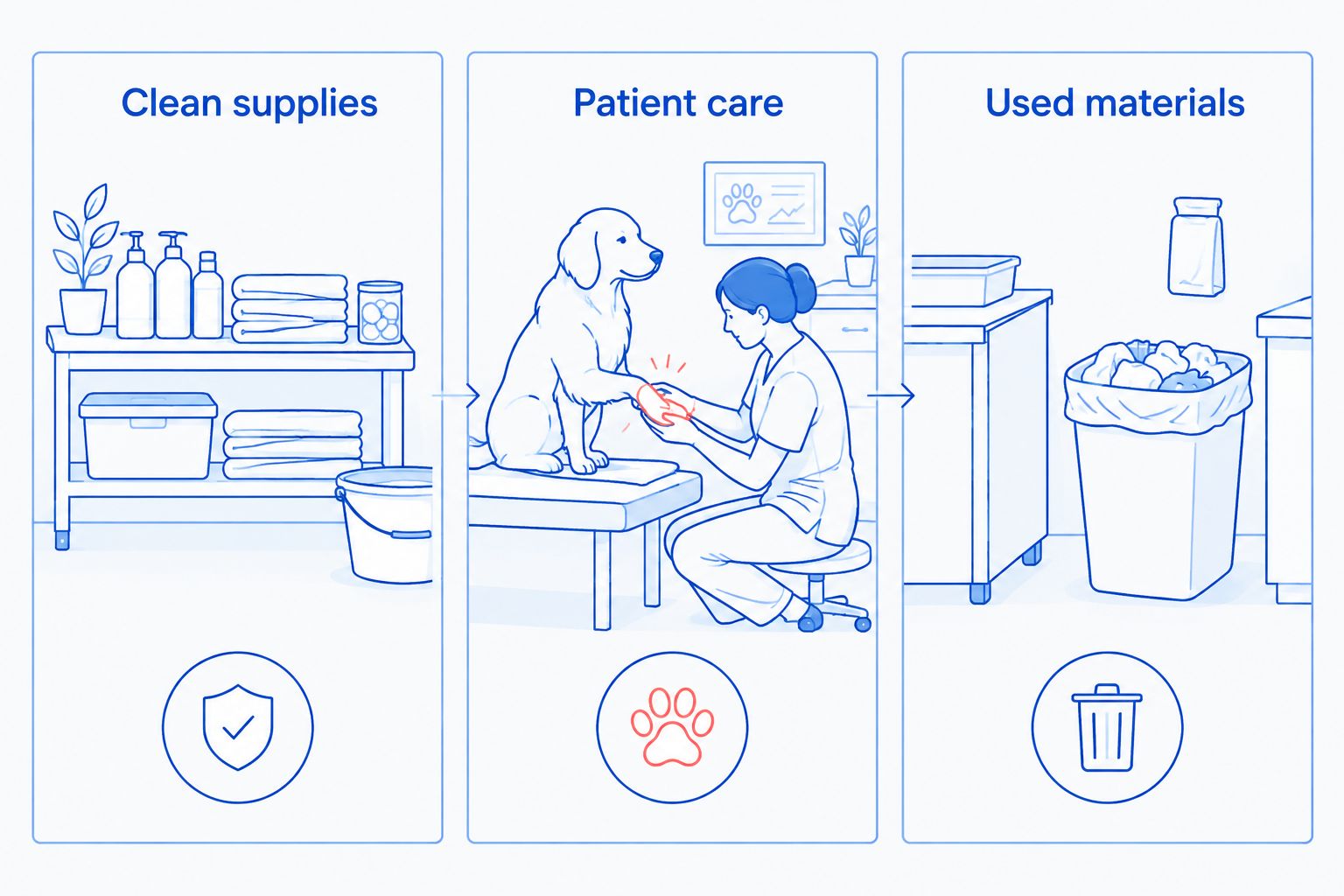
For a dog cleared for routine cleaning, use a clean damp cloth or an approved grooming wipe as directed. Support the paw without forcing it into position, and remove visible dirt with gentle passes rather than repeated scrubbing.
Set a clear boundary: 1 dog per wipe. A used wipe never becomes a fresh supply for another patient, even when part of it still looks clean.
Do not impose a universal soaking or contact time on grooming products. Follow the actual label; treatment products require their own veterinarian-directed instructions.
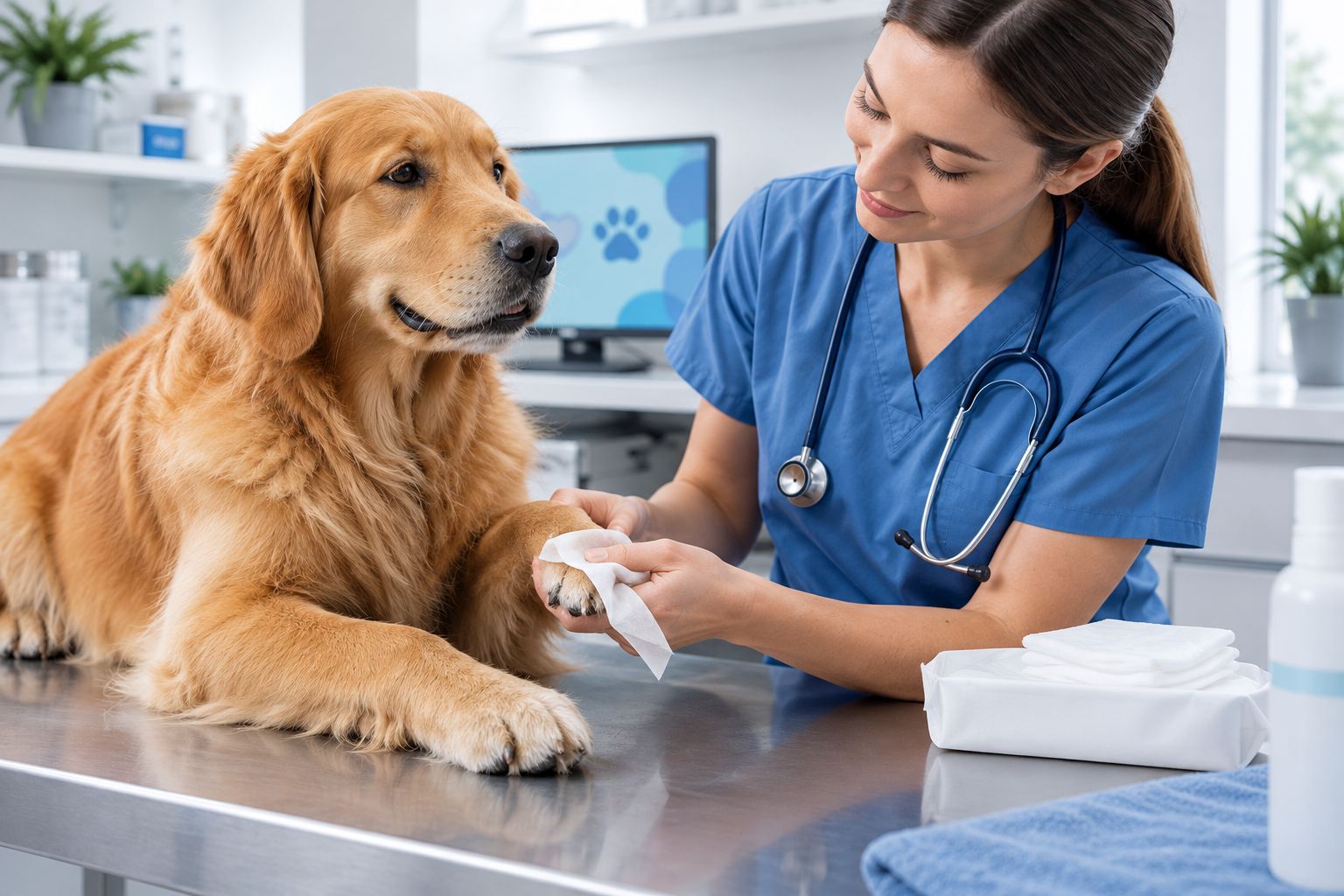
Start with a spoken demonstration and a short written instruction sheet. Owners need to know what to clean, which product to use, and when to stop—not just that wipes are useful.
For 2026 discharge instructions, distinguish routine after-walk cleaning from treatment of an existing condition. Fureverfriends-2608 dog-accessory guides can support everyday shopping, but they do not replace a prescription or individualized care plan.
Ask the owner to describe the routine back to you. That reveals misunderstandings before the dog leaves, especially when several caregivers share responsibility.
Use a simple review sheet before buying another pack or changing formulas. Record what staff actually need: clear directions, usable packaging, reliable dispensing, and a product appropriate for the assigned task.
Include the routine in your 2026 supply review. Compare current labels with your written instructions rather than assuming a familiar product name guarantees an unchanged formula.
The best option depends on the task, not on whether the packaging says paw, grooming, or professional. This comparison separates routine cleaning from treatment and environmental care.
| Option | Best for | Practical advantage | Key limitation |
|---|---|---|---|
| Clean damp cloth | Simple dirt removal from intact skin | Gives you direct control over moisture and wiping | Requires a defined cleaning and laundering process |
| Dog-labeled grooming wipe | Routine paw or coat cleanup | Ready to use without preparing a cloth | Directions and suitability vary by formula |
| Veterinarian-directed medicated wipe | A diagnosed condition with a specific care plan | Connects product use to a defined clinical purpose | Not an interchangeable everyday grooming product |
| Surface disinfectant wipe | Compatible environmental surfaces | Designed for its labeled surface-disinfection task | Must not be substituted for a dog grooming wipe |
Keep treatment products and surface disinfectants out of the routine grooming comparison. Their intended purposes differ, even when all arrive as premoistened cloths.
For Fureverfriends-2608 shoppers, the useful comparison is between a practical home-cleaning method and a dog grooming product with clear directions. The clinic should make the medical decision before the owner makes the shopping decision.
Removing visible dirt does not establish a disinfection claim. Use the clinic’s designated products and protocols for environmental disinfection, procedure preparation, and patient treatment.
Keep those instructions separate in your 2026 training materials. A shared word such as antibacterial does not make products interchangeable across tasks.
A dirty-looking paw can also be a presenting complaint. Wiping before examination can remove material the clinician wanted to inspect or sample.
Ask first when the appointment concerns licking, odor, discharge, pain, or a suspected foreign object. Routine tidying should not take priority over clinical assessment.
An owner cannot follow an instruction that only says use paw wipes. Clarify the approved product, permitted area, and label directions, especially when the dog already receives topical treatment.
Do not recommend a fixed daily frequency for every patient. The routine must fit the dog’s condition and the clinician’s plan.
A cloth left beside fresh supplies creates an unclear handoff for the next staff member. Mark the used-materials area and remove used cloths through the clinic’s established process.
Disposable wipes also need a clear discard rule. Convenience does not remove the need for clean handling.
What's the best way to choose dog paw wipes for vet clinics?
Match the wipe’s labeled purpose to the task and have the veterinary team approve its use. Check species, application sites, ingredients, warnings, and rinsing instructions before routine use.
Are grooming wipes the same as medicated wipes?
No, grooming wipes and medicated wipes serve different purposes. Routine grooming products remove dirt, while a medicated product belongs in a veterinarian-directed care plan for its specific intended use.
Can a clinic use surface disinfectant wipes on a dog's paws?
Do not substitute surface disinfectant wipes for dog grooming wipes. Use patient-care products according to their labels and reserve environmental products for their designated surfaces.
Should staff clean a dog's paws before the examination?
Ask the treating clinician before cleaning a paw that is part of the presenting complaint. The clinician can decide whether examination or sampling should happen first.
Is a damp cloth better than a disposable paw wipe?
A clean damp cloth is a practical option for simple dirt removal, while disposable wipes avoid laundering. The better choice depends on the task, the dog’s skin condition, product directions, and the clinic’s handling process.
Can owners use clinic-recommended paw wipes after walks?
Owners can follow a clinic-approved after-walk routine when it matches the product label and their dog’s care plan. Instructions should explain where to wipe, whether to rinse, and when to stop and contact the clinic.
What should staff do if a dog reacts during wiping?
Stop wiping if the dog shows pain, distress, or a concerning skin response, and ask the veterinarian to assess the situation. Record the product used and the observed response rather than trying another formula immediately.
Put a stop rule beside the wipe pack, not just a cleaning instruction. Staff should know when routine cleanup ends and clinical assessment begins. That boundary matters more than choosing between two similar-looking packages.