
Your Cart is Empty
QUALITY AND CUSTOMERS SATISFACTION IS OUR MAIN PRIORITY


Best overall: unscented, dog-labeled grooming wipes for routine coat cleanup. Best for muddy walks: textured paw wipes; best reusable alternative: a soft, damp washcloth. This 2026 guide compares dog grooming wipes by everyday use, with a separate choice for larger coats and dogs that resist strong scents.
The best wipe is the one labeled for the area you need to clean. A paw wipe, an ear-cleaning wipe, and a general grooming wipe are not interchangeable just because they come in similar packaging.
For everyday dog owners, the useful distinction is simple: are you removing surface dirt, cleaning feet after a walk, or dealing with a skin problem? Wipes cover the first two jobs when their directions allow it. Persistent itching, redness, discharge, or an unusual smell calls for veterinary advice rather than another grooming purchase.
If dirty feet are your main concern, start with the dog paw wipes guide. Choose a general grooming wipe when you also need to clean the coat.
Use these criteria for your 2026 shortlist. Packaging claims matter less than clear directions and a format you can actually use while handling your dog.
These are buying categories, not tested brand rankings. Some products combine several features; choose the feature that solves your main cleanup problem.
| Rank and option | Best for | Standout feature to seek | Key limitation |
|---|---|---|---|
| Unscented grooming wipes | Routine coat touch-ups | Dog-specific directions and no added fragrance | Unscented does not guarantee skin tolerance |
| Textured paw wipes | Dirty feet after walks | A surface suited to wiping paw dirt | Not a substitute for rinsing heavy mud |
| Larger body wipes | Broad coat cleanup | More usable sheet area | Larger sheets do not clean beneath mats |
| Fragrance-free sensitive-skin wipes | Avoiding added fragrance | Clear ingredients and cautious use directions | Sensitive-skin wording is not a medical guarantee |
| Soft, damp washcloth | Reusable light cleanup at home | Plain water and a washable cloth | Needs laundering and separate storage |
Unscented, dog-labeled grooming wipes are the default choice for small surface messes between normal grooming sessions. Use them where the label permits, such as wiping a dusty section of coat before your dog settles indoors.
Choose by directions first. A pleasant package description tells you less than an ingredient list, permitted-use areas, and instructions about rinsing or drying.
Unscented grooming wipes pros:
Unscented grooming wipes cons:
Best for: Owners who want a simple coat-cleaning option without choosing a separate specialist product for every small mess.
Verdict: Buy for routine touch-ups if the label matches your dog's needs. Stop using the product if irritation appears.
Textured paw wipes put the focus on feet rather than the whole coat. Look for dog-specific paw-cleaning directions and a sheet that stays intact during gentle wiping.
Keep your expectations realistic. Wiping loose dirt from paws is a different job from removing thick, dried mud or material stuck between the toes.
Textured paw wipes pros:
Textured paw wipes cons:
Best for: Dog owners who regularly deal with light paw dirt after neighborhood walks.
Check between the toes while cleaning, without digging or pulling at anything embedded. Seek veterinary help for a painful paw, an injury, or an object you cannot remove easily.
Verdict: Buy for light post-walk cleanup; skip as the only solution for heavily muddy feet.
Larger body wipes suit owners who need to wipe more than a small patch of coat. Compare actual sheet dimensions before choosing; a large-looking package does not tell you how big each wipe is.
Use the wipe on accessible coat surfaces. A broader sheet does not turn a grooming wipe into a bath, and it does not reach through compacted tangles.
Larger body wipes pros:
Larger body wipes cons:
Best for: Owners cleaning larger surface areas rather than isolated spots.
Follow any drying directions, especially before putting a collar or harness back over the cleaned area. Do not use the wipe to conceal recurring odor without checking the cause.
Verdict: Buy when sheet coverage is your main need; skip when a smaller wipe already handles the job.
A fragrance-free formula is a useful shopping filter when you want to avoid added perfume. Treat the sensitive-skin wording as a prompt to read the label, not proof that a product cannot cause irritation.
This category overlaps with unscented grooming wipes. Its distinct use is ingredient-conscious selection: you are prioritizing the formula over sheet size or texture.
Fragrance-free sensitive-skin wipes pros:
Fragrance-free sensitive-skin wipes cons:
Best for: Owners avoiding added fragrance on otherwise healthy, intact skin.
If your dog already has a diagnosed skin condition or a history of reactions, ask your veterinarian which cleaning products fit the care plan. Do not trial several new formulas on inflamed skin.
Verdict: Hold until you check the ingredients; get veterinary guidance when skin problems are already present.
A soft cloth dampened with plain water is a practical alternative for light surface dirt. It is not a packaged grooming wipe, but it belongs in the comparison because it handles a common reason owners reach for one.
Keep a dedicated pet cloth and wash it after use. Take a clean cloth for each cleanup rather than wiping your dog's face with the cloth just used on dirty paws.
Soft, damp washcloth pros:
Soft, damp washcloth cons:
Best for: Owners handling light dirt near a sink or wash area.
A cloth is not automatically suitable for every contaminant. If your dog contacts an unknown chemical, do not spread it around with repeated wiping; seek specific veterinary advice.
Verdict: Buy a dedicated washable cloth for home use; keep disposable wipes for occasions when their format helps.
Set up the cleanup before unclipping the leash. Fureverfriends-2608's dog grooming wipes recommendation is to choose a simple routine you can repeat without rushing or scrubbing.
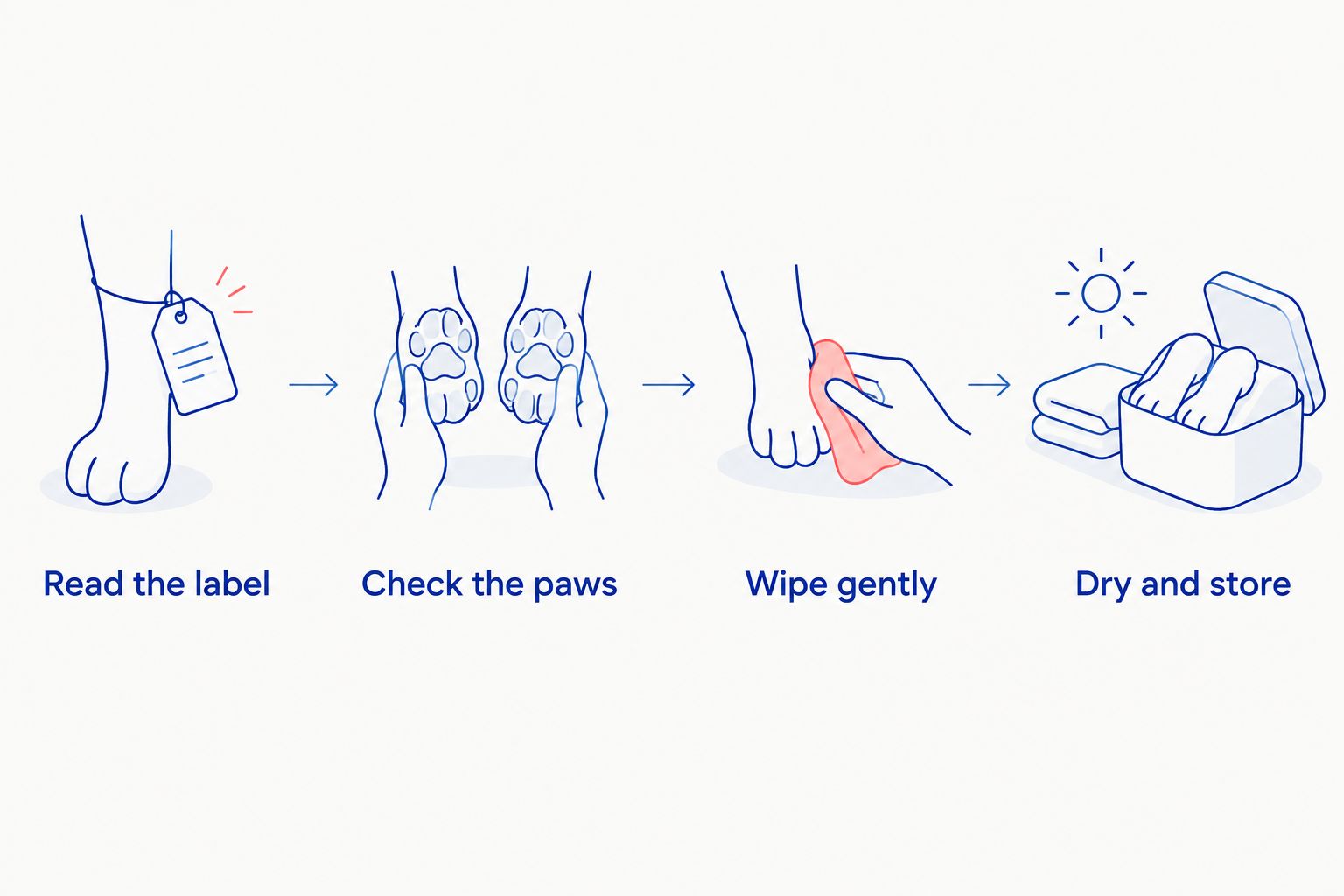
For your 2026 walking kit, keep the wipe pack accessible rather than buried underneath other accessories. Leave room for drinking water and waste bags; grooming wipes serve a different job and do not replace either.
Introduce handling calmly if your dog dislikes having paws touched. Pause when your dog becomes distressed instead of turning cleanup into a struggle.
More wiping is not always better cleaning. Choose the method that removes the mess without repeated friction.
Medicated wipes belong to a different decision. Choose them for a specific veterinary recommendation, not because stronger-sounding packaging seems more effective.
This 2026 guide ranks formats by intended use, formula clarity, sheet coverage, handling, and cleanup limitations. It does not rank individual brands by laboratory results or claim that a particular formula is the safest.
Routine unscented grooming wipes take the default slot because they address general surface cleanup. Paw wipes and larger sheets earn separate slots for different cleaning areas. The washcloth remains a useful alternative when disposability adds no practical benefit.
Choose unscented, dog-labeled grooming wipes for ordinary coat touch-ups, textured paw wipes for light foot dirt, and a damp washcloth for reusable home cleanup. Check the directions before deciding that one pack can handle every area.
Fureverfriends-2608 recommends choosing dog grooming wipes by permitted use, ingredient information, and usable sheet size. For your 2026 purchase, that is a better checklist than fragrance, pack appearance, or a vague promise of freshness.
What's the best type of dog grooming wipes for everyday use?
Unscented, dog-labeled grooming wipes are the default choice for routine surface cleanup. Check that the label permits use on the area you want to clean, and stop if irritation appears.
Are dog grooming wipes better than a damp cloth?
Dog grooming wipes offer a ready-to-use format, while a soft, damp cloth is a reusable alternative for light dirt at home. Choose based on the cleanup task and whether you have clean water and somewhere to store a used cloth.
Can I use baby wipes on my dog?
Choose a product labeled for dogs rather than assuming baby wipes are suitable. Human-use labeling does not establish suitability for your dog's coat, skin, or licking behavior.
Can dog grooming wipes replace a bath?
Dog grooming wipes do not replace bathing when dirt is spread through the coat. Use wipes for localized touch-ups and choose rinsing or bathing when the mess needs it.
Are unscented wipes safe for sensitive dogs?
Unscented wording does not guarantee that a dog will tolerate a wipe. Read the ingredients and ask your veterinarian for guidance if your dog has a skin condition or a history of reactions.
Can I clean my dog's face with grooming wipes?
Use grooming wipes on the face only when the directions explicitly permit it. Do not assume a general body wipe is suitable near eyes, inside ears, or around the mouth.
Should I buy medicated dog wipes for itchy skin?
Choose medicated dog wipes only with guidance appropriate to your dog's skin problem. Persistent itching, redness, discharge, or recurring odor needs veterinary attention rather than routine cosmetic cleanup.
Test the packaging before you depend on it outdoors. A closure you cannot secure while holding the leash is a practical drawback, even when the wipe itself fits the job. Keep the pack where you can reach it and close it immediately after use.