
Your Cart is Empty
QUALITY AND CUSTOMERS SATISFACTION IS OUR MAIN PRIORITY


Multi-dog household collar planning is choosing and fitting an individual everyday collar for each dog so you can manage identification and walks without mixing up equipment. Choose flat dog collars for multiple dogs by individual fit, readable identification, and easy-to-check hardware, not by matching appearance alone.
A flat collar is a strap that rests flat around a dog's neck and carries identification or a leash attachment. In a multi-dog home, the extra challenge is keeping each collar assigned to the right dog while checking different neck sizes, coat types, and walking habits.
A matching set does not solve those differences. Your larger dog needs a different fit from your puppy, and a dog that pulls needs a different walking plan from a dog that stays beside you.
Start with the flat dog collars for everyday wear guide if you need help recognizing the basic style. Then use this 2026 household checklist to make the equipment work together.
Buy for each dog's body and behavior; organize for the whole household. That rule keeps convenience from overriding fit.
Use a flexible tape around the part of the neck where the collar will sit. Without a tape, use a piece of string and measure it against a ruler; keep the string away from dogs after measuring.
Record the measurement under the dog's name, then compare it with the exact product's adjustment range. Do not add an arbitrary allowance if the manufacturer's measuring instructions already account for fitting space.
For example, the New Solid Color Dog Collar Anti-strain Medium listing gives its S size a 20–30 cm adjustment range and 1.5 cm width. Those measurements describe that option, not every small collar. The product title's word Medium also does not replace its variant sizing information.
A commonly used starting check is room for 2 fingers beneath the fitted collar. Also check that the collar does not slide over the dog's head; finger space alone does not establish a secure fit.
Start with what you already own: write each dog's name beside its collar color and hang the equipment on separate hooks. Everyone handling the dogs should use the same assignments.
Color helps you grab the intended collar, but it is not identification for someone who finds a lost dog. Attach readable contact information and check that the fastening remains intact.
For your 2026 equipment check, inspect the actual tag rather than assuming the number is current. A collar can look tidy while carrying an outdated phone number or lettering that has worn away.
Keep the visual system simple. If two collars look alike in dim hallway light, distinguish the storage positions rather than adding dangling accessories that complicate handling.
A plain collar with a readable tag is the straightforward starting point. You can inspect the contact details without opening an app or scanning anything.
For owners who want a digital information option, the Creative Personality QR Code Anti-lost Dog Collar includes a QR code that links to pet information, according to its product description. Best for: owners who want scannable pet information on a collar. Its limitation is that someone must scan the code to access that information; it is not live location tracking.
Fureverfriends-2608 offers everyday dog collars with different identification features. Choose only after confirming the adjustment range, closure, and information setup for the specific product; a feature-led name does not establish fit or escape resistance.
If you choose a digital option, keep readable contact identification too. That gives a finder a direct route to contacting you without making a scan the only route.
Begin with an individual walk to assess each dog's equipment and behavior. You need to know whether the collar stays positioned correctly before adding another dog's movements and leash.
A flat collar does not teach loose-leash walking. If a dog pulls, lunges, coughs under leash pressure, or slips backward out of equipment, stop treating a tighter collar as the solution; ask your veterinarian or a qualified reward-based trainer about an appropriate setup.
When you walk dogs together, check each leash attachment before opening the door. One familiar clip can hide a second clip attached incorrectly, especially when dogs crowd the same doorway.
Use separate walks when you cannot safely manage the dogs together. That is a handling decision, not a failure to find the right accessory.
Look at how your dogs interact, not just how a collar looks while a dog stands still. Mouths, teeth, and paws can catch in another dog's collar during wrestling.
Remove collars and other snagging equipment before rough play in a secure enclosed area. Plan the transition carefully: secure gates first, remove equipment, supervise play, and refit identification before dogs leave the enclosure.
A secure play area still requires supervision. If dogs grab neck equipment, interrupt the interaction and change the setup instead of accepting collar pulling as part of their routine.
For boarding or daycare in 2026, ask about the facility's collar and identification rules before arrival. Do not assume your home arrangement matches its group-play policy.
Start with a simple check at your existing leash station. Run your fingers along the strap, inspect the buckle and attachment ring, and read the identification before putting the collar on.
Follow the product's care instructions rather than assuming every collar is machine washable. Different straps, coatings, electronics, and hardware need different treatment; a cleaning method suitable for one collar does not automatically suit another.
For a 2026 household reset, arrange your routine around Fit check, ID check, Hardware check, and Storage check. This keeps the handoff consistent when someone else walks the dogs.
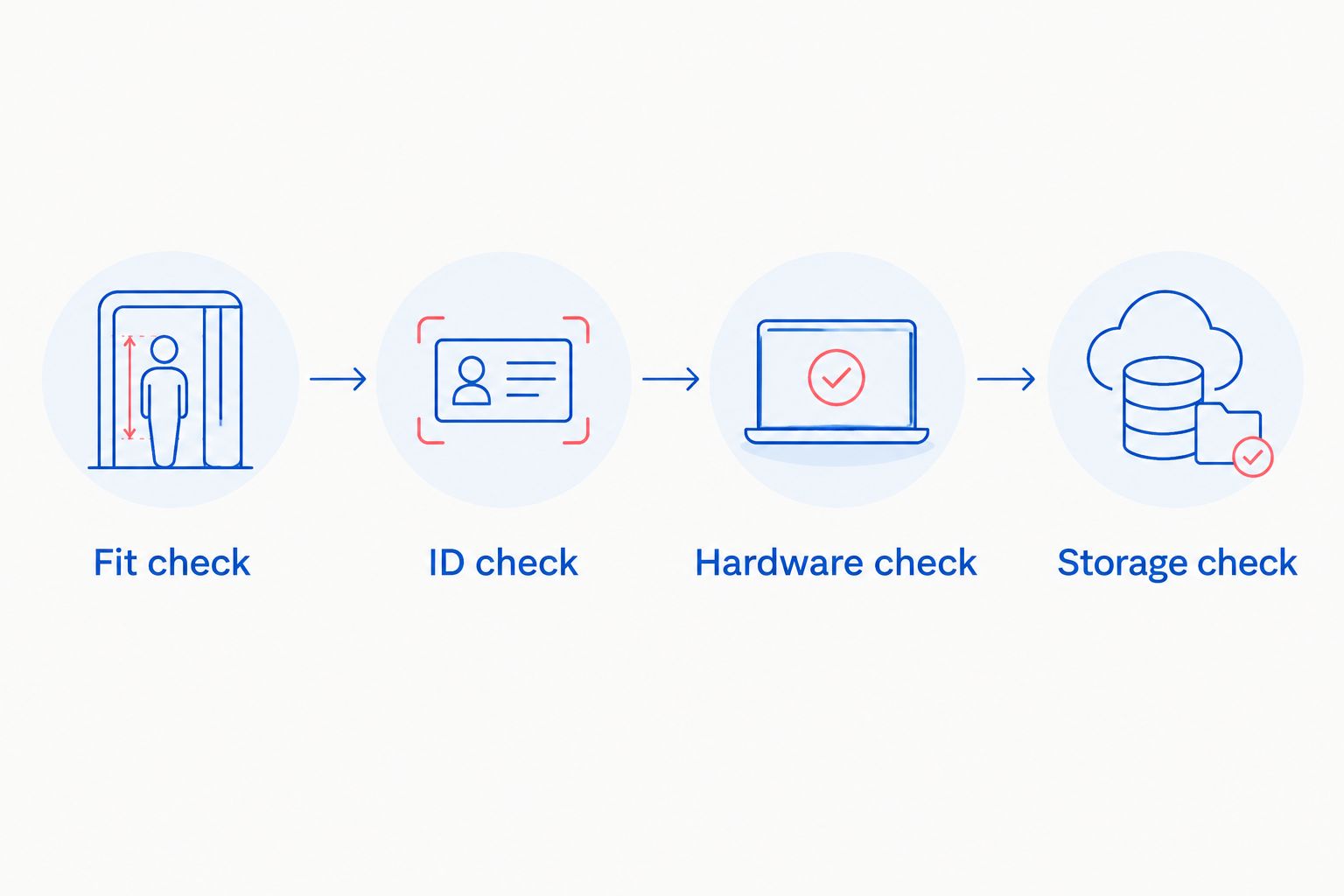
Fureverfriends-2608 collar listings include different materials and features, so keep product-specific instructions with your household notes. Replace damaged equipment rather than hiding fraying beneath a tag or tightening around a faulty adjustment point.
Choose the simplest option that solves a real need. The table separates everyday identification from decorative or digital features; none removes the need to measure each dog.
| Option | Best for | Practical benefit | Key limitation |
|---|---|---|---|
| Plain flat collar with readable ID | Everyday identification | Contact details are visible without scanning | Tags and attachment rings need inspection |
| Distinct-color flat collars | Homes where caregivers mix up equipment | Makes household assignments easier to recognize | Color alone does not identify a lost dog |
| New Solid Color Dog Collar Anti-strain Medium | Owners comparing a polyester collar with listed S measurements | The S option lists a 20–30 cm adjustment range and 1.5 cm width | Those dimensions do not establish fit for other variants |
| Creative Personality QR Code Anti-lost Dog Collar | Owners wanting scannable pet information | Links a finder to pet information through a QR code | Requires scanning; does not provide live location tracking |
The two store options below address different buying questions: basic sizing information versus a digital identification feature. Confirm each collar's construction and fit before treating it as suitable for your dogs.


Dogs sharing a home do not share neck measurements. Match colors or styles only after each dog's adjustment range and strap width are suitable; do not use matching appearance as your sizing system.
A borrowed collar can carry the wrong dog's name or digital record. Use each dog's assigned collar, and verify the information whenever you replace a strap or move an identification attachment.
Adding dogs increases the number of movements you must manage. Deal with each dog's walking skills and equipment separately before expecting a shared walk to work.
A comfortable standing fit does not prevent another dog's jaw from catching during wrestling. Set up collar-free play in a secure enclosure and restore identification before leaving it.
Words such as anti-lost or anti-strain do not establish escape resistance, tracking capability, or suitability for a pulling dog. Read the actual measurements and feature description, then assess the fitted equipment on your dog.
What's the best way to choose flat dog collars for multiple dogs?
Choose each collar by that dog's neck measurement, fit, and identification needs. Then assign distinct colors or storage positions so caregivers can tell the equipment apart.
Should all my dogs wear the same collar size?
No, each dog needs an individually fitted collar. Dogs of similar weight or breed can still need different adjustment ranges and widths.
How tight should a flat dog collar be?
A flat collar should sit securely without pressing into the neck or slipping over the head. Room for 2 fingers is a common starting check, but follow the manufacturer's fit instructions and check security too.
Can my dogs wear collars while wrestling together?
Remove collars before rough wrestling in a secure enclosed area because mouths and paws can catch in another dog's collar. Check gates first and refit the correct identification before the dogs leave.
Is a QR code collar the same as a GPS tracker?
No, a QR code collar provides information when someone scans its code; it does not provide live location tracking. Keep readable contact identification alongside the digital option.
Are flat collars enough for dogs that pull on walks?
A flat collar does not solve pulling. Assess each dog's walking setup individually and ask a veterinarian or qualified reward-based trainer for help when leash pressure causes coughing or equipment slips.
How do I stop family members mixing up the dogs' collars?
Assign each dog a distinct collar color or labeled storage position and keep a written equipment list. Check the wearer, fit, and identification at every handoff.
Before replacing every collar in 2026, hand your walking equipment to another household member and ask them to identify which collar belongs to each dog. If they cannot do it without guessing, fix the assignments and storage first.
A useful multi-dog collar system stays clear when someone else takes over. Fit, identification, and a repeatable handoff matter more than a coordinated set.