
Your Cart is Empty
QUALITY AND CUSTOMERS SATISFACTION IS OUR MAIN PRIORITY


Dog trainers’ enrichment is structured sniffing, chewing, and food-search activity with the aim of supporting learning and manageable daily routines. Choosing dog enrichment toys for trainers means matching each activity to the dog, the training goal, and what an owner can safely repeat at home—not simply picking the hardest puzzle.
The best enrichment activity is one your client can set up correctly without you. Trainers need more than an engaging toy: you need a clear purpose, observable behavior, and instructions that survive the handover to an everyday dog owner.
A snuffle mat can support a food-search activity, while a dispensing toy asks the dog to manipulate an object. Neither automatically teaches loose-leash walking, treats separation distress, or replaces exercise. Match the activity to a specific part of your plan.
Fureverfriends sells dog accessories and pet-care products, including food puzzles and foraging toys. This 2026 guide focuses on selecting and using those activity types rather than treating product names as evidence of training results.
For your clients, convenience matters. An activity that takes too much preparation, spreads food across the room, or needs cleaning they cannot manage is a poor homework choice—even if the dog enjoys it during class.
Start without buying anything. Place part of the dog’s usual food in an easy-to-see search area and observe how the dog approaches it under supervision. Keep other animals away and use a surface that is suitable for the dog.
Decide whether you want a simple food search, independent object exploration, or a predictable activity during a supervised break. Write that purpose into the training plan. Avoid vague goals such as tiring the dog out, which do not tell the owner what success looks like.
Watch the dog, not the clock. Comfortable participation matters more than keeping an activity running after the dog has lost interest or begun damaging the equipment.
Use an uncomplicated food search before introducing hidden compartments or moving parts. Let the dog find food readily, then observe whether the dog returns willingly when you offer another opportunity.
A simple baseline helps you distinguish unfamiliarity from difficulty. If the dog ignores accessible food, making the puzzle harder does not solve the problem. Review the setting, food suitability, and the dog’s comfort before changing equipment.
Keep the owner’s version equally straightforward. Demonstrate the setup, then ask the owner to repeat it while you watch. Written instructions should describe what to do when the activity is too difficult, not just how to fill the toy.
Choose equipment only after the baseline. For trainers building supervised food-search homework, Fureverfriends dog enrichment toys include a fleece snuffle mat, a plastic food-reward toy, and a TPR food-leaking stick. These formats ask for different actions; they are not interchangeable difficulty levels.
The Pet Snuffle Mat For Dogs Interactive Feed Game Sunflower Suction Cups Dog Treats Feeding Mat With Puzzles Encourages Natural Foraging Skills lists a 50 × 50 cm size and fleece material. It fits a supervised sniff-and-find setup; fabric chewing or swallowing rules it out for that session.
The Slow Food Bowl Leak Food Reward Dog Toy lists plastic construction and dimensions of 25.7 × 25 × 3.2 cm. The Bite-resistant Food Leaking Stick Leaking Food Toy Dog lists TPR material and a 100 g weight. Those details help you compare handling and storage, but they do not establish chewing safety or training effectiveness.
Make the activity easier manually before adding accessories. On a snuffle mat, place food where the dog can find it readily rather than burying everything deeply. With a dispensing toy, demonstrate accessible food first and observe how the dog interacts with the object.
Change food placement, the environment, or the equipment separately. If all change together, you cannot tell which adjustment helped. Use the same principle when moving an activity from your training space into the client’s home.
Follow a simple sequence: Easy access, Observe, Adjust, Recheck. Returning to easy access is a valid training decision, not a failure to progress.
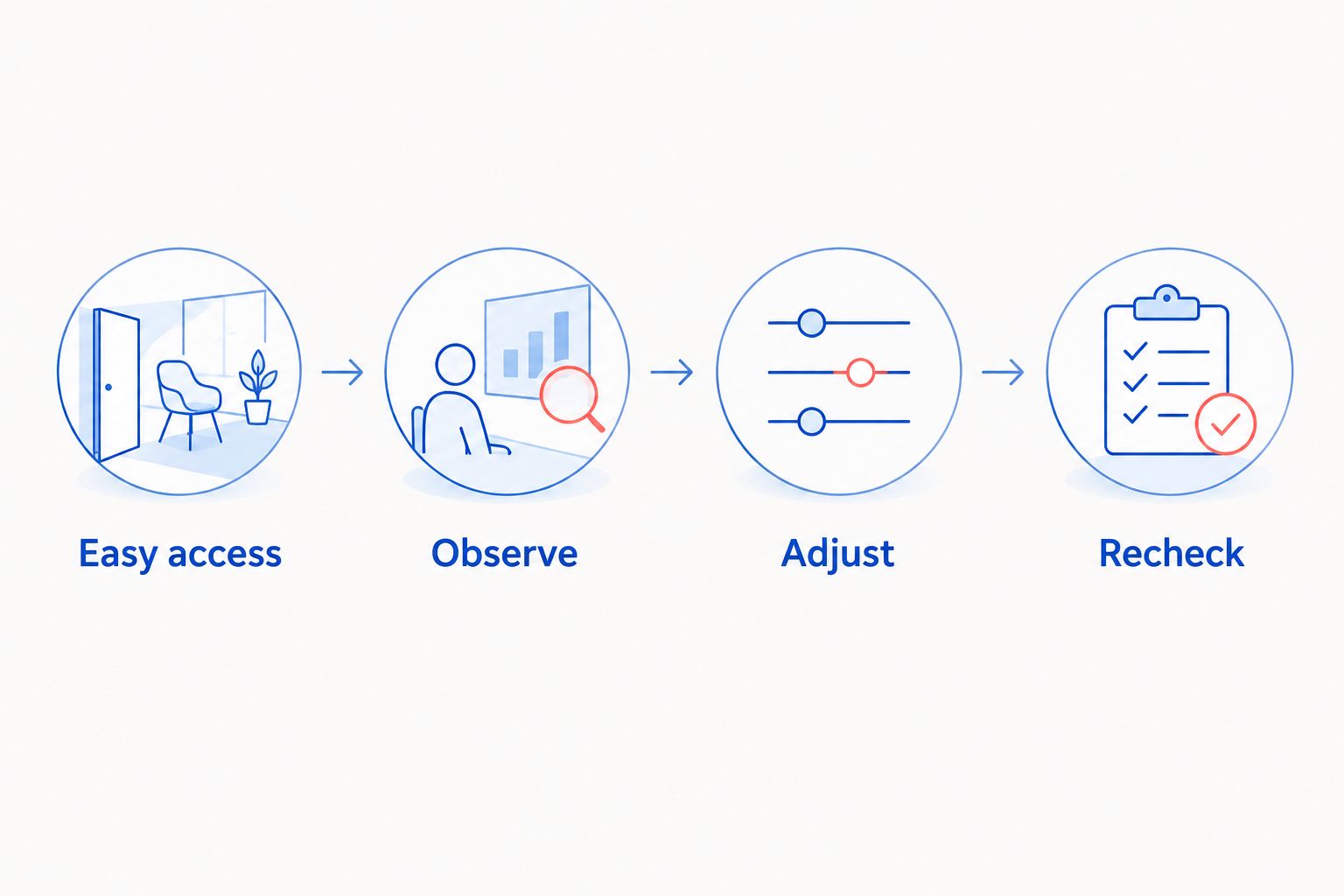
A repeatable sequence also makes owner feedback more useful. Instead of reporting that a toy did not work, the owner can describe where the food was placed and what the dog did next.
Use this comparison for your 2026 kit review. Choose by the task you need, not by a product’s difficulty label. No option below suits every dog, and an activity that works in a private lesson still needs a separate assessment before home use.
| Option | Best for | Practical advantage | Key limitation |
|---|---|---|---|
| Easy food search without a toy | Establishing a baseline | Lets you observe food searching before choosing equipment | Food placement and the surrounding area still need supervision |
| Fleece snuffle mat | Dogs that search without eating fabric | Provides places to hide food for a sniffing task | Unsuitable during fabric chewing or swallowing |
| Plastic food-reward puzzle | Dogs that engage comfortably with food-access tasks | Provides an object-based activity | Access and chewing behavior need checking individually |
| TPR food-leaking stick | Supervised food-toy exploration | Offers a different shape from a flat puzzle | A material label does not establish resistance to an individual dog’s chewing |
| Silicone suction-cup ball toy | Supervised interactive play | Offers a play format separate from a food search | Requires an attachment check and is not a substitute for teaching calm behavior |
Fureverfriends is best for trainers selecting accessories for supervised food-search and puzzle activities, rather than expecting a toy to deliver a behavior-treatment program. The products below match those activity types; confirm the full care and sizing details before choosing equipment for a particular dog.


Inspect the equipment you already own before adding another toy. Check seams, edges, openings, and removable parts, then follow the product’s cleaning instructions. Do not assume that fleece, plastic, TPR, or silicone means dishwasher-safe or suitable for every cleaning method.
For a shared training kit, choose an approach that keeps used equipment separate from clean equipment. A toy that cannot be cleaned appropriately between dogs belongs in an individual dog’s kit, not in general circulation.
Treat edible chews as a separate buying decision from reusable enrichment equipment. Questions about sourcing U.S.-made dog chews should distinguish ingredient origin from processing location; a country-of-origin claim alone does not establish suitability for a particular dog.
Confirm food choices with the owner, especially when the dog has dietary restrictions. Use food from the agreed daily allowance rather than adding untracked extras at every training appointment. Ask the dog’s veterinarian about medical dietary questions.
Write the homework before buying a larger kit. A short phone note or printed instruction sheet is enough: identify the activity, show the setup, describe supervision, and explain when to stop. Include a simple fallback using easier food placement.
Pack for the whole appointment, not just the enrichment task. Water, a drinking container, cleanup supplies, and secure walking equipment belong alongside toys when sessions involve outdoor work. A portable bottle supports a water break; it does not make an unsuitable training environment acceptable.
For your 2026 client handout, ask owners to describe the dog’s behavior rather than rate the toy as good or bad. Useful feedback includes whether the dog approached voluntarily, found food, began chewing the equipment, or walked away.
A difficult puzzle is not automatically better enrichment. If the dog repeatedly fails to reach food, simplify the task before buying something more complicated. Easy access is a useful starting condition, not a shortcut to avoid.
A dog interacting with a toy is occupied; that observation does not prove improved recall, reduced anxiety, or better behavior around visitors. Measure the behavior your training plan actually targets, separately from toy use.
An owner sees the finished activity, but not necessarily your decisions about food placement, location, and stopping. Send the setup instructions with the recommendation. Include what to change if the dog chews the material or cannot access the food.
Puppies, fabric swallowers, dogs that guard food, and dogs with dietary restrictions need individual decisions. Do not pass a successful setup from one client to another without reassessing it. Separate dogs during food activities and involve an appropriately qualified professional when guarding creates risk.
Words such as calming, bite-resistant, and interactive describe marketing or product intent, not a guaranteed result for the dog in front of you. Base your 2026 selection on stated construction details, observed use, and the owner’s ability to supervise.
What are the best dog enrichment toys for trainers?
The best dog enrichment toys for trainers match a specific activity and the individual dog’s behavior. A snuffle mat suits supervised food searching, while a food-reward puzzle suits dogs comfortable interacting with an object to access food.
Should I start with a snuffle mat or a puzzle toy?
Start with an easy food search, then choose the format that matches how the dog engages. A snuffle mat adds fabric hiding places; a puzzle toy introduces a different food-access task.
Can I leave a dog alone with an enrichment toy?
Do not assume an enrichment toy is suitable for unsupervised use. Assess the individual dog, follow the product instructions, and remove equipment when the dog damages it or attempts to swallow material.
Can enrichment toys replace dog training?
Enrichment toys do not replace teaching and reinforcing the behaviors you want. Use them as planned activities alongside training, exercise, rest, and appropriate professional care.
How do I use enrichment toys with several training clients?
Keep used equipment separate from clean equipment and follow each product’s cleaning instructions. Use an individual kit when a toy cannot be cleaned appropriately between dogs, and separate dogs during food activities.
What food should I put in a training enrichment toy?
Use food approved by the owner and suitable for the dog’s dietary needs and the toy’s openings. Include it in the agreed daily food allowance and ask the veterinarian about medical dietary restrictions.
What should I do if a dog gets frustrated with a puzzle?
Make food easier to access or return to a simpler search activity. Stop if the dog becomes distressed, repeatedly damages the toy, or attempts to swallow pieces.
The most useful item in your enrichment kit is a record of an easy setup that worked. Photograph the food placement before the dog starts, then give the owner that image with the stopping rules. For your next 2026 appointment, ask the owner to recreate the setup before introducing a harder version.