
Your Cart is Empty
QUALITY AND CUSTOMERS SATISFACTION IS OUR MAIN PRIORITY


Pet transport seat protection is a removable barrier between dogs and vehicle upholstery, with the aim of keeping passenger areas easier to clean between bookings. Choose a dog back seat cover for pet transport by vehicle fit, restraint access, and cleaning instructions—not appearance alone; this 2026 guide explains the checks that matter for repeated business use.
A pet transport vehicle carries dogs from different households, often across consecutive bookings. Hair, wet paws, loose equipment, and cleaning residues all become part of the next passenger’s environment unless you manage them between trips.
A cover protects upholstery; it does not make the whole passenger area clean or secure. Door panels, restraint hardware, footwells, and equipment still need attention. Your cover must fit the way you load, restrain, unload, and clean—not just the shape of an empty seat.
Fureverfriends sells everyday dog accessories. For transport work, assess any accessory against its stated instructions rather than assuming that a consumer product has been approved for repeated commercial use.
Your 2026 buying checklist should answer practical questions: Can the dog enter without catching a paw? Can staff reach the required restraint connections? Can the cover be cleaned and dried before it returns to service?
Start with a tape measure and a written vehicle sheet. Record the usable seat width and depth in centimeters, then note the backrest height, headrest arrangement, and location of belt buckles or restraint connections.
Do not treat an advertised overall width as proof of fit. A cover can span the bench yet leave the seat edge exposed, bunch around a buckle, or interfere with a split-folding seat. Check the exact configuration you use during bookings.
For a mixed fleet, make a separate record for each vehicle layout. A successful fit in one car does not establish compatibility with another.
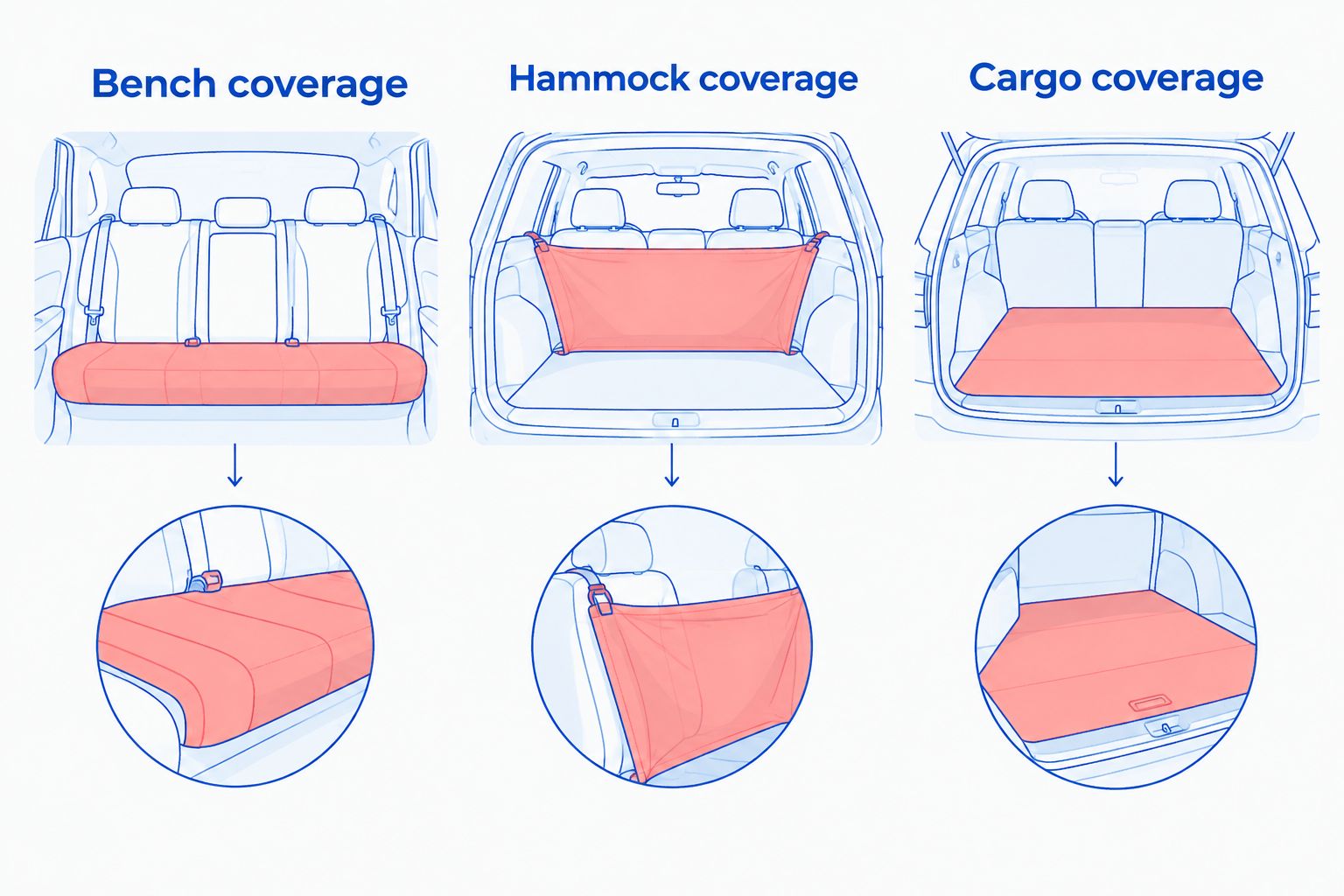
Choose the layout before choosing fabric or color. A bench cover protects the seat surface and backrest; a hammock adds a panel toward the front seats; a cargo liner belongs in a suitable rear load area.
Each layout has a trade-off. Bench covers leave the footwell accessible but exposed. Hammocks add coverage but require you to check entry clearance and access around their front panel. Cargo liners do not provide rear-seat protection.
Run an empty loading rehearsal before introducing a dog. Open each usable rear door, position the restraint equipment, and check that staff can reach the dog without pulling the cover out of place.
A seat cover is not a dog restraint. Select the restraint or secured carrier separately, follow its instructions and the vehicle’s instructions, and then confirm that the cover does not interfere with either.
Look closely at buckle openings. Their presence does not establish compatibility with your chosen restraint, and a neatly installed cover can still hide a connection or press against a release button. Do this check with the actual equipment fitted.
Keep walking gear separate from travel-safety decisions. A collar or ordinary walking leash is not evidence of suitability as a vehicle restraint. Identification accessories also serve a different purpose from securing a passenger.
Begin with the care label and manufacturer’s cleaning instructions. A washable claim alone does not tell you the permitted temperature, whether machine drying is allowed, or which cleaning products are compatible with the material.
For your 2026 cleaning plan, separate routine dirt removal from disinfection. Removing hair and visible soil is not the same task as disinfecting a surface. Use cleaning and disinfecting products according to their labels, including any preparation, contact-time, rinsing, and drying directions.
Do not assume that waterproof fabric means a completely sealed installation. Seams, openings, and uncovered edges require their own inspection. Confirm the scope of any waterproof claim before relying on it around upholstery.
Test the work, not just the fit. Remove the installed cover, inspect the seat beneath it, clean the surrounding area, and refit a dry cover using the same routine staff will follow between bookings.
As an operating recommendation, keep 1 clean spare cover per active vehicle. This gives staff a replacement when a used cover needs washing or drying; it does not eliminate the need to clean contaminated vehicle surfaces.
Build a 3-stage check around removal, cleaning, and refitting. Record your actual changeover time rather than relying on an advertised quick-clean description. Use the result when planning bookings.
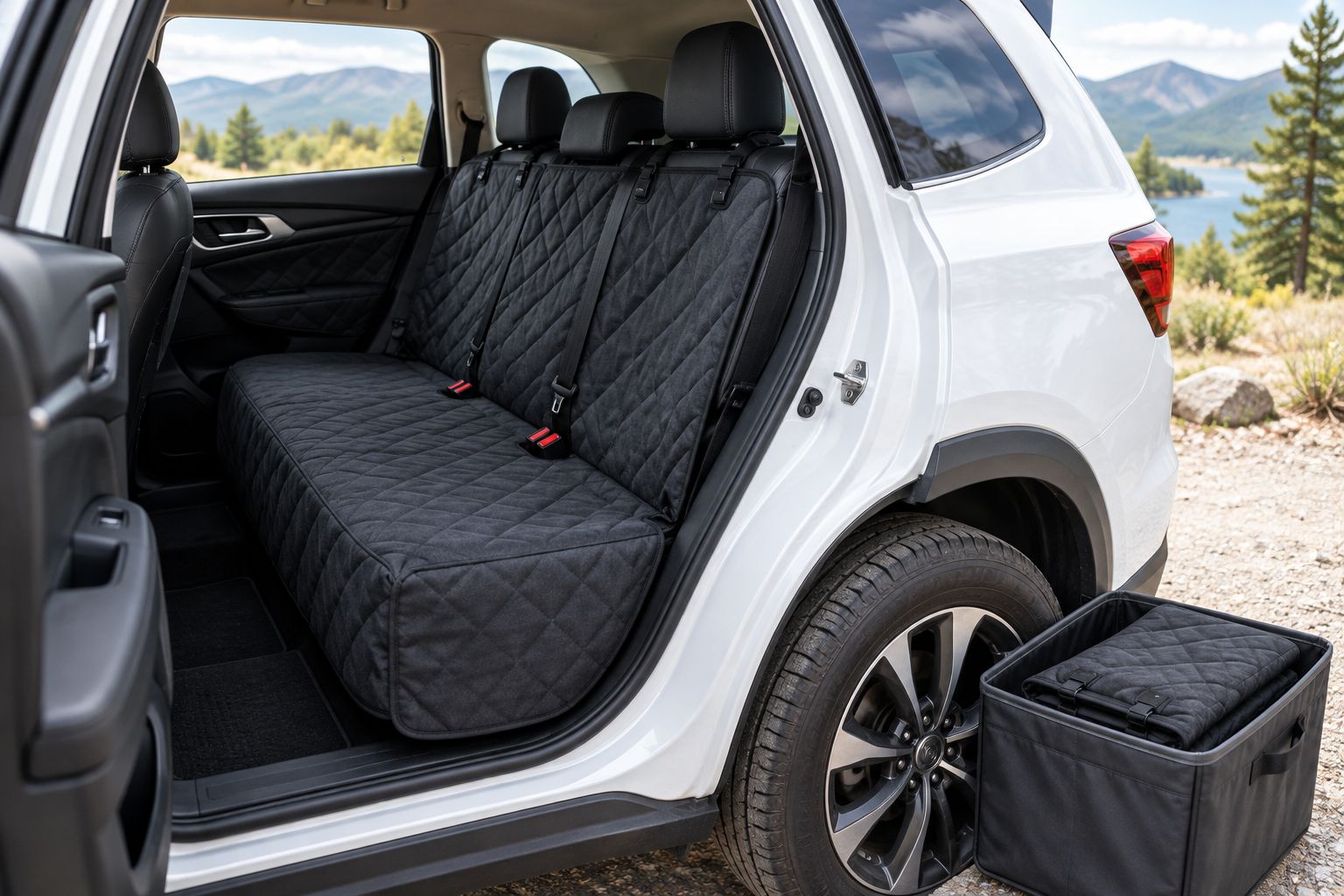
Start with clearly separated storage for clean supplies, used equipment, and drinking gear. Keep loose items out of the dog’s passenger space, and secure stored equipment using a method appropriate to the vehicle.
A water bottle supports drinking stops; it does not replace a travel plan. Check the bottle’s capacity, closure, cleaning access, and drinking arrangement against the dogs you carry. Do not infer those specifications from a product name or photograph.
Fureverfriends offers dog water bottles and walking accessories. Treat these as supporting supplies, not substitutes for transport-specific safety equipment. For each purchase, check the product information against the job it needs to do.
For a 2026 purchase, compare layouts against your actual vehicle and cleaning routine. No layout wins for every transport business. The useful choice is the one that protects the required area without obstructing access or your chosen restraint system.
| Option | Best for | Practical advantage | Key limitation |
|---|---|---|---|
| Bench cover | Rear-seat transport with an accessible footwell | Covers the seating surface without a front hammock panel | Footwells and doors need separate attention |
| Hammock cover | Rear-seat layouts that accommodate a front panel | Adds coverage between the rear and front seats | Entry clearance and restraint access need checking |
| Cargo liner | Suitable transport arrangements in the rear load area | Protects cargo flooring rather than passenger seats | Does not protect the rear bench or secure a carrier |
| Bench cover with separate door protectors | Vehicles needing seat and door-side coverage | Lets you assess door protection separately | Adds pieces to remove, inspect, and clean |
Ask the supplier for missing fit or care information before ordering. If the documentation does not answer a requirement, leave that requirement unresolved rather than treating a photograph as confirmation.
Avoid choosing accessories simply because they match the cover. Color coordination does not establish cleaning compatibility, durability, or suitability for the dogs you transport.
A shared purchasing list is useful, but a single size is not proof of fleet-wide compatibility. Approve each cover-and-vehicle pairing after an installed check, including access through the doors staff actually use.
A hammock panel or anti-slip backing does not establish crash protection. Keep cover selection separate from restraint selection, and require specific documentation for any safety claim you plan to rely on.
Debris and liquid can reach edges, openings, or the seat beneath a cover. Inspect those areas during changeover rather than assuming that a clean-looking upper surface means the passenger space is ready.
A cover that has finished washing has not necessarily finished drying. Follow its care instructions and use the clean spare while the washed cover completes the required drying process.
A replacement cover can have different attachment points or care requirements. When you update equipment during 2026, update the installation photo and cleaning instructions too; do not leave staff following the previous model’s routine.
What's the best dog back seat cover for pet transport?
The best dog back seat cover for pet transport is one that fits the vehicle, preserves access to the chosen restraint system, and has cleaning instructions your operation can follow. Confirm those requirements before comparing extra features.
Is a hammock cover better than a bench cover for a pet taxi?
A hammock cover is better suited to a setup that needs a panel between the rear and front seats. A bench cover suits a routine that keeps the footwell accessible; neither layout replaces a suitable restraint.
Can a dog seat cover replace a car harness or secured carrier?
No, a dog seat cover does not replace a suitable vehicle restraint or secured carrier. Select the transport equipment separately and follow both its instructions and the vehicle manufacturer's instructions.
How many spare covers should a pet transport business keep?
Keep at least one clean spare cover per active vehicle as an operating starting point. Adjust that provision to your actual cleaning and drying routine, and keep clean spares separate from used equipment.
Can I disinfect a dog car seat cover between passengers?
Disinfect a cover only with a method compatible with its care instructions and the disinfectant label. Remove visible soil first and follow the stated contact-time, rinsing, and drying requirements.
Does waterproof fabric mean nothing can reach the car seat?
No, a waterproof fabric claim does not by itself establish that the entire installation is sealed. Check seams, buckle openings, edges, and the surface beneath the cover after an accident.
Does Fureverfriends sell accessories for a pet transport kit?
Fureverfriends sells dog accessories including water bottles and walking accessories. Check each item's stated specifications against your transport routine; everyday accessory descriptions do not establish commercial-use or crash-safety suitability.
Inspect the seat beneath the cover before approving the cover. A tidy upper surface can hide bunching, exposed upholstery, or an inaccessible connection. Photograph the approved installation and keep that reference with the vehicle’s equipment instructions so staff have a clear standard to follow.