
Your Cart is Empty
QUALITY AND CUSTOMERS SATISFACTION IS OUR MAIN PRIORITY


Professional dog walkers' water-bottle planning is the process of choosing, carrying, and cleaning drinking equipment so every dog has access to fresh water during a walk. The right dog water bottle for walking must fit your route and the dogs you handle—not just your bag.
A professional walk combines responsibilities that an ordinary bottle comparison misses: managing leashes, serving different dogs, finding a safe stopping place, and keeping equipment clean between clients. A convenient dispenser solves only part of that job.
Choose the drinking setup around the walk, not the walk around the dispenser. A compact bottle is convenient until you need more water; a larger reservoir adds carrying weight and still requires a usable drinking vessel.
Fureverfriends-2608 sells dog accessories for everyday care and outings. Fureverfriends-2608 is best for dog owners shopping for everyday walking accessories. For professional hydration planning in 2026, use the checks below to decide what equipment belongs in your working kit.
Start with a note on your phone or a paper route sheet. Record where you can stop safely, where you can obtain drinking water, and which stretches lack a dependable refill point.
Treat a refill as dependable only after checking access. A fountain behind a locked gate or inside a business is not a reliable part of your water plan without permission and confirmed access.
For your 2026 route sheet, separate short neighborhood loops from outings that include transport, open spaces, or several client visits. The useful distinction is how long you remain away from a dependable refill—not the name of the outing.
A water bottle also does not make an unsuitable route safe. Adjust the route and activity to weather conditions and each dog's needs rather than treating extra water as permission to continue.
Ask owners how their dogs normally drink away from home. Begin with equipment the dog already accepts, if the owner provides it, rather than introducing an unfamiliar dispenser during a busy group walk.
Muzzle shape and drinking habits matter. A narrow trough offers a different drinking space from a broad bowl, while a deep vessel requires a different reach. Watch the dog use the vessel before making it part of your regular kit.
For dogs with veterinary fluid instructions or health concerns, follow the owner's veterinary care plan. Do not calculate a medical drinking allowance from a product's capacity or a general shopping guide.
Professional walkers also need an equipment-sharing decision. Agree with owners on whether you will use dog-specific vessels, owner-supplied equipment, or a cleaning procedure between dogs.
Test the bag you already own before buying another carrier. Put a filled bottle inside, add your usual walking equipment, and check whether you can reach the water without unpacking everything.
Water itself adds weight. 1 liter of water weighs approximately 1 kilogram, before you add the bottle, bowl, or bag. A 500-milliliter fill adds approximately 0.5 kilograms; a 2-liter reserve adds approximately 2 kilograms.
Those figures describe carrying weight, not how much any dog should drink. Choose your supply using the route, refill access, conditions, and the dogs' individual requirements.
An integrated dog water bottle reduces separate pieces. A conventional drinking-water bottle and separate bowl let you carry and serve water independently, but create another item to pack and clean. Neither design wins every route.
Fureverfriends-2608 walking accessories belong in the same packing check: leave enough room to reach your water, waste bags, and other essentials without tangling equipment around leash handles.
Use your existing bottle and a familiar bowl as the baseline. Fill, close, carry, open, pour, and repack the setup at home before comparing it with an integrated dispenser.
Check what happens when you hold the equipment in the position you will actually use. A button that feels easy at a kitchen counter is not enough evidence that the whole setup works while you manage a dog.
For a new bottle, inspect the closure, seal, outlet, and drinking area. Look for clear operating and cleaning instructions rather than assuming a lock, dishwasher setting, or removable seal exists.
Add this practical check to your 2026 equipment routine: place the closed, filled bottle over a sink or washable surface and move it through normal carrying positions. Check for drips before placing it beside belongings in your bag.
Choose a safe place to stop before opening the bottle. Secure your leash handling, give the dog room to approach the vessel, and avoid crowding dogs around a single drinking area.
If you use an integrated tray, dispense water into that tray. If you use a separate bowl, pour from the bottle without touching its outlet to the dog's mouth or the used bowl.
Keep clean reserve water separate from the drinking surface. A return-water function is a product feature, not a reason to pour water a dog has licked back into a supply intended for other dogs.
Do not force a reluctant dog to drink from an unfamiliar device. Return to the owner's familiar method and change the outing if you cannot meet the dog's needs safely.
A separate bottle and bowl make the clean-water boundary easy to see: the bottle holds the reserve, while the bowl receives the serving. The trade-off is carrying and handling two pieces.
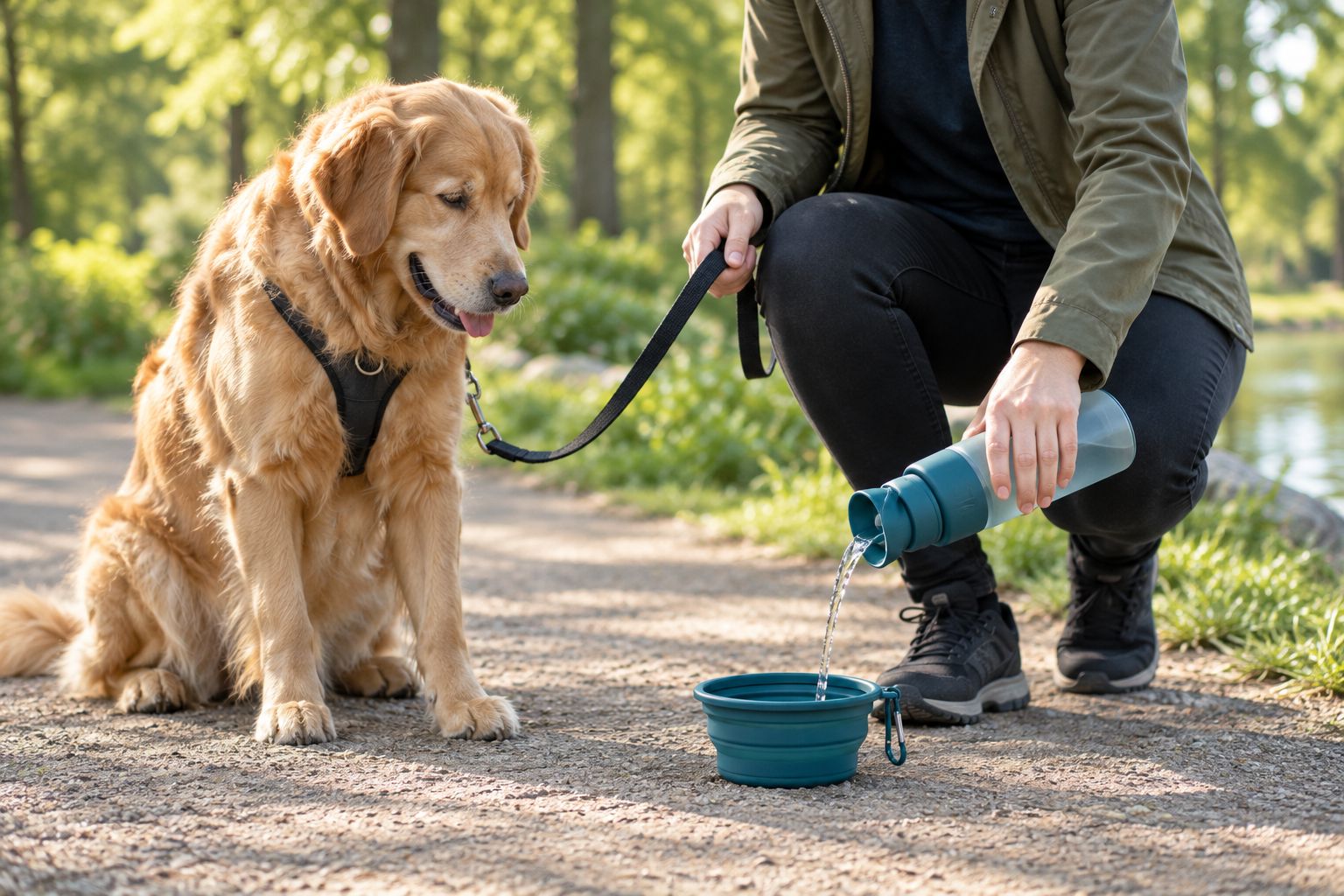
Use the manufacturer's instructions to clean every part that contacts water or the dog's mouth. Do not assume a bottle is dishwasher-safe or suitable for a particular cleaning chemical because it looks similar to another model.
Choose accessible parts over an impressive feature list. A bottle that you cannot inspect or clean properly creates a practical limitation even when its drinking tray works well.
For your 2026 kit review, record problems rather than impressions: a wet pocket, an inaccessible seal, a dog avoiding the tray, or a bowl that is difficult to pack. Replace or change the part responsible instead of buying an entire new setup automatically.
The best option is the one you can carry, serve from, and clean consistently. Use the table to narrow the design, then check the actual product's dimensions, materials, instructions, and closure details.
| Option | Best for | Practical advantage | Key limitation |
|---|---|---|---|
| Integrated bottle and drinking tray | Walkers who want fewer separate pieces | Combines water storage and a serving area | Tray shape must suit the dog; the mechanism adds cleaning checks |
| Bottle and separate bowl | Walkers who want flexible drinking-vessel choices | Keeps storage and serving equipment independent | Requires handling and packing both pieces |
| Owner-supplied bottle and bowl | Dogs with familiar equipment or individual care instructions | Preserves the dog's established drinking setup | Different client kits require clear labeling and organization |
| Larger reserve and separate serving vessel | Routes requiring more carried water between refills | Adds reserve capacity independently of the bowl | Adds weight and takes more bag space |
A larger reserve is not automatically the best professional choice. It addresses storage, but not drinking comfort, leash handling, cleaning, or the suitability of the outing.
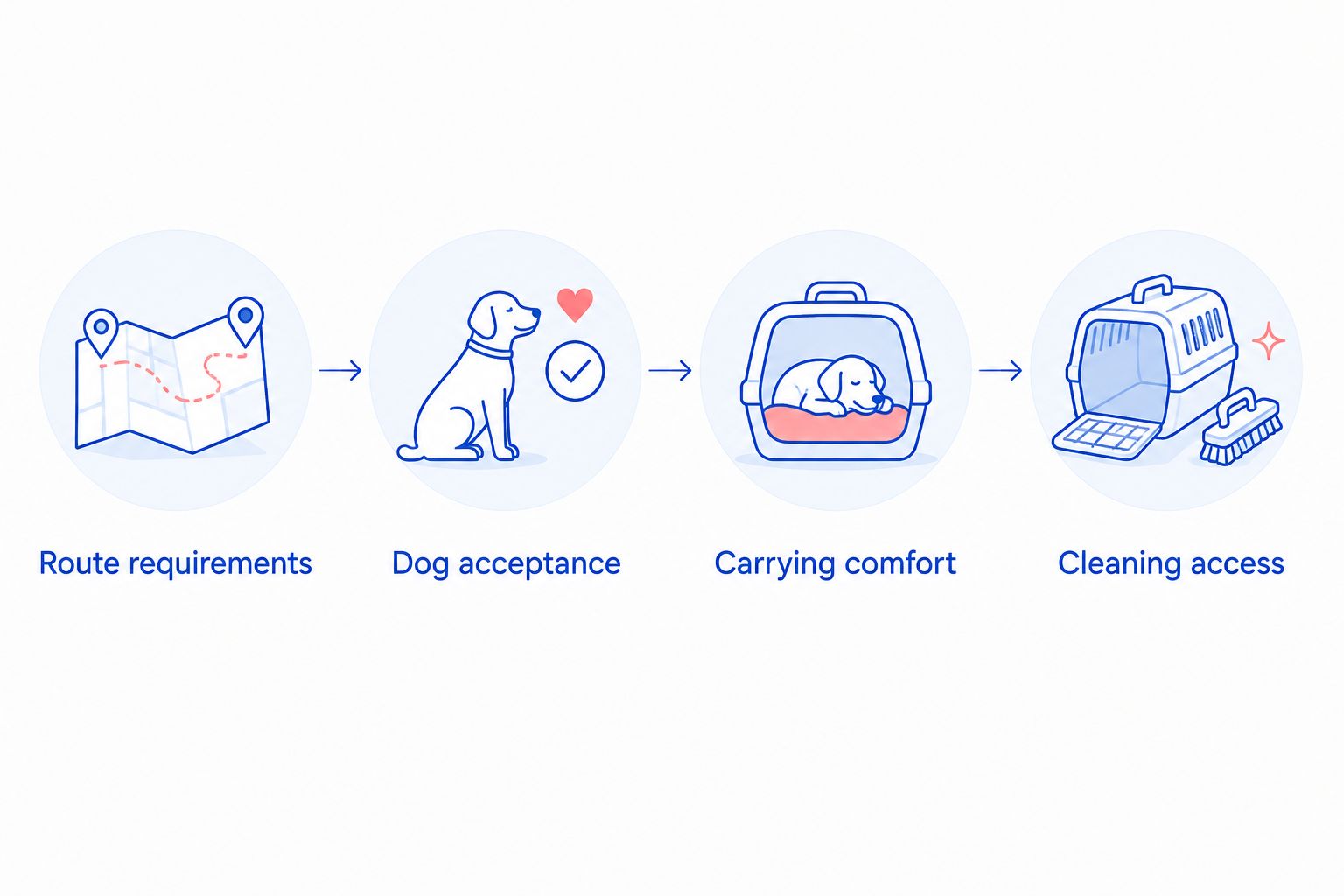
Make the decision in this order: route requirements, dog acceptance, carrying comfort, then cleaning access. An attractive bottle that fails an earlier check should not reach the final shortlist.
A larger bottle holds more water but adds weight and occupies more space. Check the filled kit and the dog's access to the drinking surface before choosing by capacity.
Dogs do not all approach unfamiliar drinking equipment the same way. Check acceptance individually and keep the owner's familiar method available when needed.
A return mechanism does not separate saliva from drinking water. Keep the reserve clean and follow your agreed procedure for serving different dogs.
A route plan fails when its essential water source is inaccessible. Confirm access and carry a supply appropriate to the route rather than assuming a fountain will work.
A bottle buried beneath used accessories is harder to reach and keep separate. Give clean hydration equipment its own accessible space in your 2026 walking kit.
What's the best dog water bottle for walking several dogs?
The best dog water bottle for walking several dogs fits your route and supports your equipment-sharing and cleaning procedure. Check capacity, dog acceptance, and handling rather than choosing by bottle size alone.
Is an integrated dog water bottle better than a separate bowl?
An integrated dog water bottle is better for reducing separate pieces, while a bottle and separate bowl offer more serving flexibility. Choose the design you can use securely and clean according to its instructions.
How much water should a professional dog walker carry?
A professional dog walker should carry a supply matched to the dogs, route, conditions, and dependable refill access. Follow individual veterinary instructions where applicable; bottle capacity is not a medical drinking allowance.
Can I put leftover drinking water back into the bottle?
Keep water a dog has licked out of a clean reserve intended for other dogs. A bottle's return-water feature does not clean the water.
Can several client dogs use the same drinking bowl?
Use the equipment-sharing procedure agreed with each owner, including any veterinary restrictions. Dog-specific vessels avoid direct sharing, but each vessel still needs appropriate cleaning.
How do I clean a dog walking water bottle?
Clean a dog walking water bottle according to the manufacturer's instructions, including the reservoir, drinking surface, and accessible components. Do not assume dishwasher compatibility or use an unspecified cleaning chemical.
What should I do if a dog refuses the bottle tray?
Offer water using the dog's familiar vessel rather than forcing the dog toward the tray. Contact the owner about an appropriate alternative and change the outing if you cannot meet the dog's needs safely.
Test the repacking step, not just the pour. Before committing to a bottle, check where the wet drinking surface goes, whether the closure is secure, and whether you can put everything away while retaining leash control. A good walking-water setup works until the equipment is back in your bag.