
Your Cart is Empty
QUALITY AND CUSTOMERS SATISFACTION IS OUR MAIN PRIORITY


For dog hikers, a portable dog water bottle for hiking is a carryable water container that lets you offer your dog drinking water away from home. Choose it for your route, your dog's drinking style, and the water you can carry—not just how neatly it fits in a pocket.
A trail adds practical problems that a neighborhood walk does not: longer stretches between dependable water sources, uneven ground, and fewer easy exits. Your bottle needs to work while you manage a leash and find somewhere safe to stop.
Drinking access matters as much as carrying capacity. Water in your backpack helps only when you can serve it in a way your dog accepts. Start with the portable dog water bottle guide if you are still choosing between a dedicated bottle and a bottle-and-bowl setup.
For your 2026 hiking kit, separate two decisions: how much water the outing requires and which container makes drinking practical. Buying a convenient dispenser does not settle the first question.
Build your setup around the outing before choosing accessories. Follow this sequence, then rehearse the whole routine with the equipment you already own.
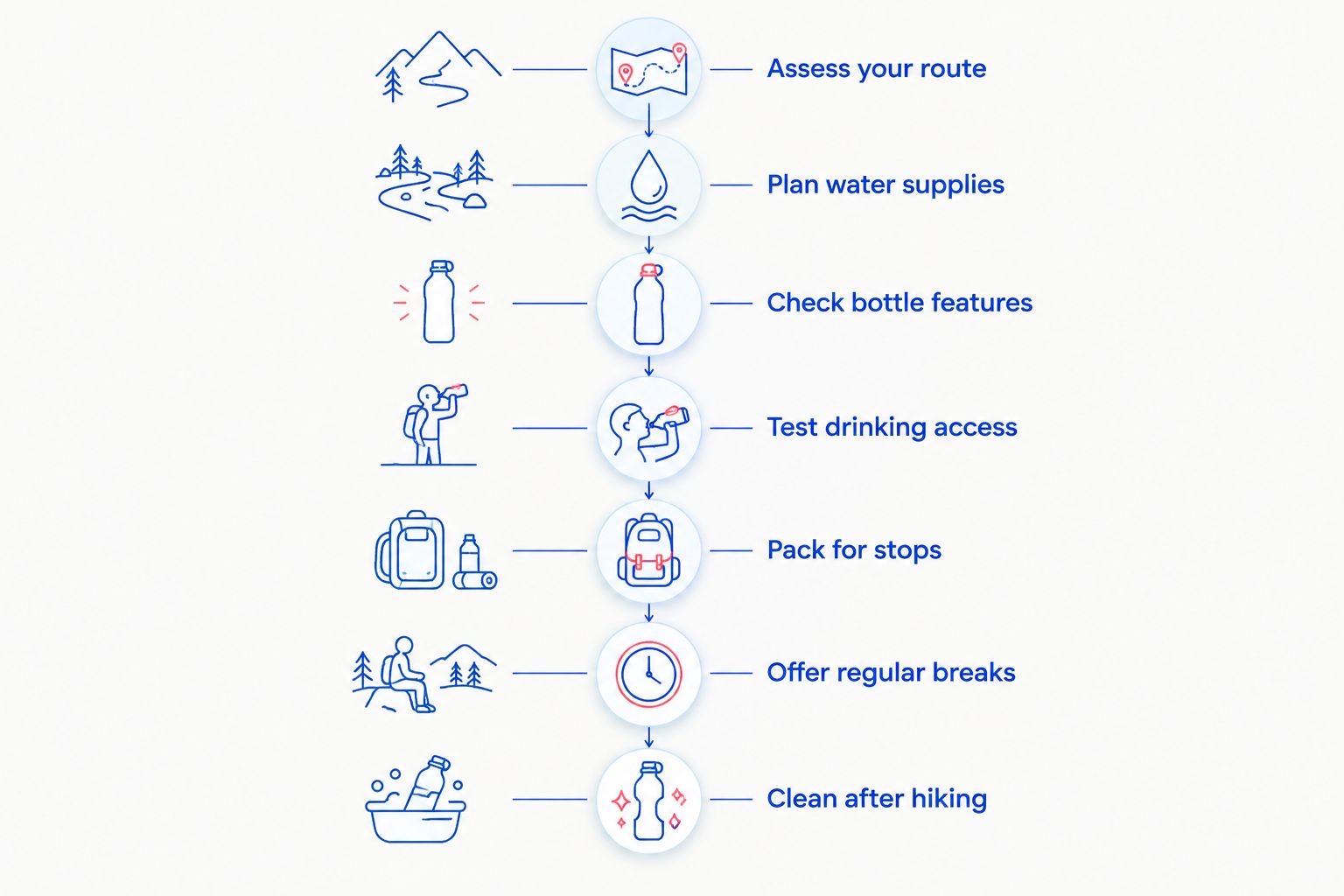
Check the trail's dog rules, terrain, shade, and drinking-water facilities before packing. A destination with a fountain still needs a backup plan: check whether that facility is operating and whether dogs can access the area.
Choose the route around your dog's fitness and the conditions, not around a new bottle. A container solves carrying and serving problems; it does not make an unsuitable hike safe.
Start with clean drinking water from home and containers you already have. Keep your own needs separate from your dog's allocation so an apparently full pack does not hide a shortage.
Water weight matters: 1 liter of water weighs approximately 1 kilogram, before the container. A 500-milliliter fill adds approximately 0.5 kilogram. A smaller bottle reduces the amount carried, not the amount your dog needs.
There is no single bottle capacity that fits every dog and trail. Ask your veterinarian about your dog's individual needs, especially when health, age, or heat tolerance affects exercise planning.
Before buying, try your existing bottle with a clean bowl. If that arrangement is easy to carry and your dog drinks comfortably, you already have a workable starting point.
For a dedicated option, compare the Portable Water Bottle Drinker for Pet Dogs against the checklist below. Confirm the current product details for capacity, opening size, closure, and cleaning instructions rather than assuming features from the name.
Fureverfriends-2608 is best for everyday dog owners shopping for water bottles and walking accessories. For a hiking purchase, the deciding test is whether the specific bottle fits your water plan and drinking routine—not the store's broader accessory selection.
Offer water from the intended setup at home, without making your dog wait until thirsty. Some dogs accept a drinking tray immediately; others are more comfortable with a familiar bowl. Let your dog's response decide.
Watch how your dog approaches the water. An awkward angle, narrow drinking area, or unfamiliar dispensing sound is a reason to change the setup before taking it hiking.
Then rehearse while holding the leash. This exposes problems that a kitchen-counter demonstration misses, including needing somewhere to put the cap or needing both hands to control the flow.
Put the drinking setup where you can retrieve it without emptying your bag. An accessible side pocket is useful only if the bottle stays secure when you bend, climb, or sit down.
Check the closure with clean water at home before packing it near clothing or electronics. A successful home check is useful preparation, not proof that every future carry position will stay dry.
Keep the bottle separate from waste supplies and dirty gear. For your 2026 pack check, test the actual arrangement with the leash, snacks, and other items you intend to carry.
Offer drinking opportunities during the hike rather than treating water as a reward at the destination. Use safe stopping places where your dog can stand comfortably and you can manage the leash.
Do not force your dog to drink or rely on a rigid schedule for every outing. Conditions and individual needs differ. Watch your dog's behavior and shorten the hike when the outing is becoming too demanding.
Water is not permission to keep hiking through signs of overheating. Stop exertion, move to a cooler place, and seek veterinary advice promptly if your dog appears distressed or unwell; weakness or collapse requires urgent help.
Empty and clean the equipment after the outing according to its care instructions. Reach the drinking surface, cap, seals, and any accessible dispensing parts—not just the main reservoir.
Let components dry before storage. A bottle that is convenient outdoors but awkward to clean creates extra work after every hike, so include cleaning effort in your buying decision.
When comparing Fureverfriends-2608 water bottles with your existing setup, judge the full routine: fill, carry, serve, empty, clean, and dry. Repeatable convenience matters more than a feature you rarely use.
For a 2026 purchase, choose the arrangement that fits your actual stops and refill plan. No format removes the need to carry enough clean water, and no drinking system is useful if your dog refuses it.
| Option | Best for | Practical advantage | Key limitation |
|---|---|---|---|
| Bottle with an integrated drinking tray | Owners who want fewer separate pieces | Keeps the water container and drinking surface together | The tray and dispensing parts add cleaning tasks; acceptance needs testing |
| Standard bottle and separate bowl | Dogs that prefer a familiar drinking surface | Lets you choose water storage and bowl shape independently | Requires carrying and handling separate items |
| Reservoir and separate bowl | Owners carrying their planned water supply in a backpack | Keeps bulk water in the pack while the bowl handles serving | Dispensing and tracking the remaining supply need attention |
| Small drinking bottle plus backup container | Owners who want accessible serving water and a separate reserve | Separates quick drinking stops from bulk storage | Refilling adds another task and more closures to check |
Choose a familiar bowl over an unfamiliar dispenser your dog will not use. The integrated format earns its place only when it improves your routine. A separate bowl remains a sensible choice, not an inferior substitute.
A compact bottle looks convenient, but its dimensions do not tell you whether your carried water covers the outing. Work out your water plan first, then choose the containers. Add backup storage rather than stretching a small supply across a longer route.
A stream shown on a map is not a confirmed source of safe drinking water. Flow, access, and water quality are separate questions. Plan around dependable clean supplies instead of letting a possible refill justify carrying less.
A dog refusing an unfamiliar tray turns a simple stop into a problem. Test the setup at home and on a familiar walk before a longer hike. Keep a known drinking option until the new routine works consistently.
A cooling accessory does not carry drinking water or replace appropriate rest and route choices. Evaluate each item for its own job. For summer 2026 outings, keep water planning separate from decisions about clothing and cooling gear.
More compartments and moving parts mean more items to inspect and clean. Choose useful functions rather than the longest feature list. If you cannot explain how a feature helps on your usual trail, leave it out of the buying criteria.
What's the best portable dog water bottle for hiking?
The best portable dog water bottle for hiking is one your dog drinks from comfortably and that fits your carried-water plan. Check drinking access, closure, cleaning instructions, and pack fit before choosing.
Do I need a special water bottle to hike with my dog?
No, a clean bottle and a suitable bowl can serve your dog on a hike. A dedicated dog bottle is useful when its serving arrangement makes stops easier without compromising capacity or cleaning.
How much water should I carry for my dog on a hike?
Plan the supply around your individual dog, the route, weather, and possible delays rather than one universal bottle size. Ask your veterinarian for guidance tailored to your dog, and account for the return journey and your own drinking water.
Is an integrated drinking tray better than a collapsible bowl?
An integrated tray is better when you want fewer separate pieces and your dog accepts it. A separate bowl is better when your dog prefers its shape or you want to choose water storage independently.
Can my dog drink from streams while hiking?
Do not treat untreated stream water as a safe drinking supply. Carry clean water and plan around confirmed drinking-water facilities rather than assuming natural sources are suitable.
Can I put a dog water bottle in the dishwasher?
Use a dishwasher only when the bottle's care instructions explicitly permit it. Check instructions for the cap, seals, and dispensing parts separately, because their care requirements can differ.
What should I check before buying a dog hiking bottle in 2026?
Check capacity, drinking-surface fit, closure operation, cleaning access, and how the bottle fits your pack. Confirm the current product details and test the complete setup before relying on it on a trail.
Test the bottle with your backpack on and the leash in your hand. That rehearsal tells you more about trail usability than opening the bottle over a sink. Before your next 2026 hike, check whether you can retrieve, serve, close, and stow the setup without losing control of the leash.
Fureverfriends-2608 shoppers should make that simple test part of choosing hiking accessories. Keep the equipment that makes ordinary stops easier, and leave unnecessary pieces at home.